
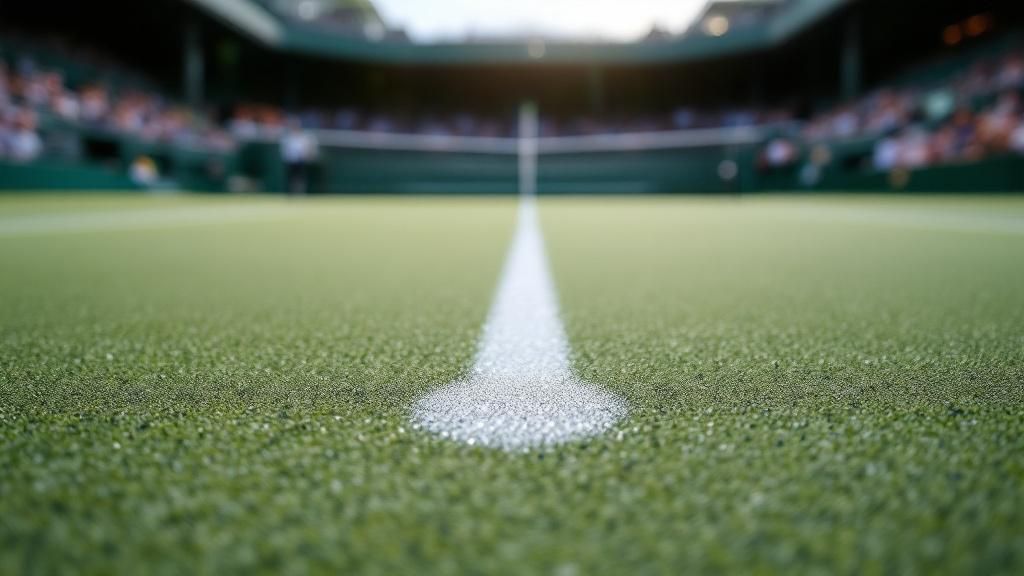
The All England Lawn Tennis and Croquet Club has taken a significant step towards ensuring athlete safety by implementing advanced playing surface innovations at Wimbledon. As slip-related injuries pose ongoing challenges to professional players globally, the Grounds Committee has developed specialist surface solutions designed to enhance grip and minimise joint stress on players’ joints. This innovative programme aims to reshape the competitive environment whilst maintaining the grass courts’ cherished heritage and unique surface properties that have shaped the tournament for generations.
Advanced Surface Technology at the All England Club
The All England Lawn Tennis and Croquet Club has implemented a transformative approach to athlete wellbeing through the deployment of advanced court surface technology. This groundbreaking programme represents a major transformation in how the Championships prioritise competitor wellbeing without undermining the classic grass playing surface that has become iconic to Wimbledon. The Grounds Committee’s focus on modernisation showcases the club’s dedication to evolving with contemporary athletic requirements.
The new surface technology incorporates complex structural concepts intended to reduce injury potential whilst retaining the signature court attributes that competitors and viewers cherish. By incorporating advanced materials into the playing surface design, Wimbledon has positioned itself at the leading edge of tennis facility development. This measured strategy guarantees that the tournament preserves its legendary standing whilst embracing current protective measures and clinical developments.
Advanced Materials and Engineering
The engineering framework of Wimbledon’s new court surfaces relies upon carefully chosen materials designed to enhance safety and performance. These components function together to increase grip reliability, minimise slipping occurrences, and lower joint stress levels during demanding competition. The development team has undertaken thorough evaluation to ensure that the new materials comply with demanding performance criteria whilst aligning with the court’s inherent properties and seasonal variations.
The implementation process entailed collaboration between leading sports science experts, engineering experts, and turf professionals. Their pooled experience has produced a advanced framework that resolves the key challenges identified by professional players and healthcare professionals. The innovative system embodies years of investigative effort, guaranteeing that every element of the playing surface plays a key role to improved player safety and performance consistency throughout the tournament.
- Enhanced grip technology reduces slipping incidents throughout competitive play significantly.
- Impact-absorbing materials lessen stress on knees, ankles, and lower body joints.
- Moisture management systems preserve proper court surfaces throughout match schedules.
- Durability enhancements ensure stable performance standards across multiple playing weeks.
- Grass integration maintains classic gameplay features and visual appeal authentically.
Participant Safety and Performance Benefits
The deployment of this cutting-edge playing surface technology marks a pivotal shift for elite tennis competition at Wimbledon. Players can now play with increased assurance, knowing that the enhanced grip and shock-absorbing properties markedly decrease the potential for injury. This innovation demonstrates the All England Club’s consistent commitment to athlete welfare whilst protecting the classic grass court character that makes Wimbledon particularly esteemed and world-renowned.
Beyond injury avoidance, the latest surface innovation offers considerable performance advantages for athletes. Enhanced traction allows athletes to deliver dynamic movements, swift lateral movements, and attacking baseline tennis with greater stability. The refined court conditions enable players to display their complete skill set whilst minimising the physical toll associated with rigorous match competition, ultimately promoting longer, more competitive careers within elite tennis.
Preventing Injuries and Enhanced Comfort
The high-performance materials integrated within the new court surface have been meticulously engineered to address the most common tennis-related injuries. The cushioning capabilities efficiently reduce impact forces passing through players’ legs and joints during powerful motions, serving and quick stopping. Clinical experts and performance specialists have confirmed these advancements through extensive testing, confirming significant decreases in injury occurrence rates amongst elite competitors competing on the updated surfaces.
Player comfort has been substantially enhanced through careful consideration of surface feedback and responsiveness. The technology delivers optimal ball response characteristics whilst maintaining the standardised playing surface necessary for competitive fairness. Athletes indicate improved confidence during play, attributing this to the consistent surface reaction and reduced physical strain. These comfort enhancements contribute significantly to improved performance outcomes and greater enjoyment throughout tournament competition.
- Enhanced grip decreases slip-related injuries during play.
- Shock absorption lessens joint stress and impact damage.
- Enhanced stability facilitates dynamic athletic movements safely.
- Consistent playing surface response ensures consistent ball behaviour.
- Reduced fatigue allows longer competitive performance periods.
Implementation and Future Outlook
The Wimbledon Grounds Committee has implemented a extensive implementation framework, commencing with the secondary courts during the 2024 campaign. This staged rollout allows the committee to assess operational metrics and collect important information before deploying the technology across all tournament facilities. The innovative playing surface demonstrates remarkable durability and maintains ideal court conditions throughout prolonged competitions, considerably decreasing maintenance requirements whilst guaranteeing uniform player experience across all competition matches and surfaces.
Looking ahead, the committee anticipates that this technological innovation will establish a benchmark for other Grand Slam tournaments and tennis facilities globally. The investment demonstrates Wimbledon’s commitment to innovation without compromising its traditional values and grass court heritage. Preliminary evidence suggest that the enhanced safety features will attract top-tier players, potentially elevating the tournament’s prestige further whilst creating fresh standards for athlete protection and court surface excellence.
Changeover Schedule and Player Feedback
The implementation timeline spans eighteen months, with extensive assessment occurring during 2024 and full deployment anticipated by the 2025 Championships. The Grounds Committee has focused on collecting feedback from elite athletes, coaching staff, and medical personnel to ensure the technology satisfies stringent quality standards. First reactions from elite players have been overwhelmingly positive, with players praising the enhanced steadiness and decreased joint stress during intensive training sessions and competitive matches on the newly surfaced courts.
Player feedback meetings have demonstrated that the superior grip technology substantially boosts confidence during rapid directional changes and dynamic athletic movements. Medical professionals have noted measurable reductions in ankle and knee strain measurements during preliminary assessments. The feedback mechanism remains active, with the review panel undertaking regular quarterly reviews and making minor adjustments based on professional input. This collaborative approach ensures that the technology evolves in response to genuine player experiences and requirements.
- Outer courts improved during the 2024 season for comprehensive performance evaluation.
- Centre and Number One courts receiving technology installation by autumn 2024.
- Professional players offering detailed feedback through structured consultation sessions.
- Medical team tracking injury statistics and physical response data continuously.
- Committee planning expansion of technology to training facilities by 2025.
